
Many businesses continue investing in SEO, advertising, content creation, and web design while overlooking one of the most important systems underneath digital performance: website speed and usability.
Slow, unstable, or poorly optimized websites often create invisible friction that impacts search visibility, engagement, mobile usability, conversion performance, and customer trust long before businesses recognize a problem exists.
Many older websites were never designed for modern mobile expectations, performance-focused search systems, AI-driven discoverability, or today’s user behavior. As digital ecosystems continue evolving, weak website performance increasingly becomes a hidden growth bottleneck instead of a competitive advantage.
At Incend Media, we help businesses improve the technical performance underneath how websites actually operate today.
Slow-loading websites often reduce engagement and increase abandonment rates.
Oversized media and inefficient asset delivery frequently reduce overall performance..
Many websites still struggle to perform consistently across phones and tablets.
Unstable page rendering often creates frustrating user experiences during loading.
Bloated technical environments frequently slow websites and reduce efficiency.
Weak caching often limits performance consistency and scalability.
Modern websites must function consistently across phones, tablets, laptops, and desktop devices.
Users increasingly expect websites to load and respond immediately.
Performance now contributes directly to modern search visibility and discoverability.
Modern websites should feel smooth, predictable, and reliable during interaction.
Modern websites are now evaluated simultaneously by users, search engines, AI systems, and advertising platforms. Strong website performance must support usability, responsiveness, technical accessibility, and consistent delivery across every environment.
Today’s digital ecosystems increasingly rely on mobile usability, rendering speed, responsive behavior, technical efficiency, and stable user experience signals when evaluating website quality. At the same time, users expect websites to feel smooth, fast, and reliable regardless of screen size or connection speed.
At Incend Media, we optimize websites for how modern users and modern discoverability systems actually interact online.
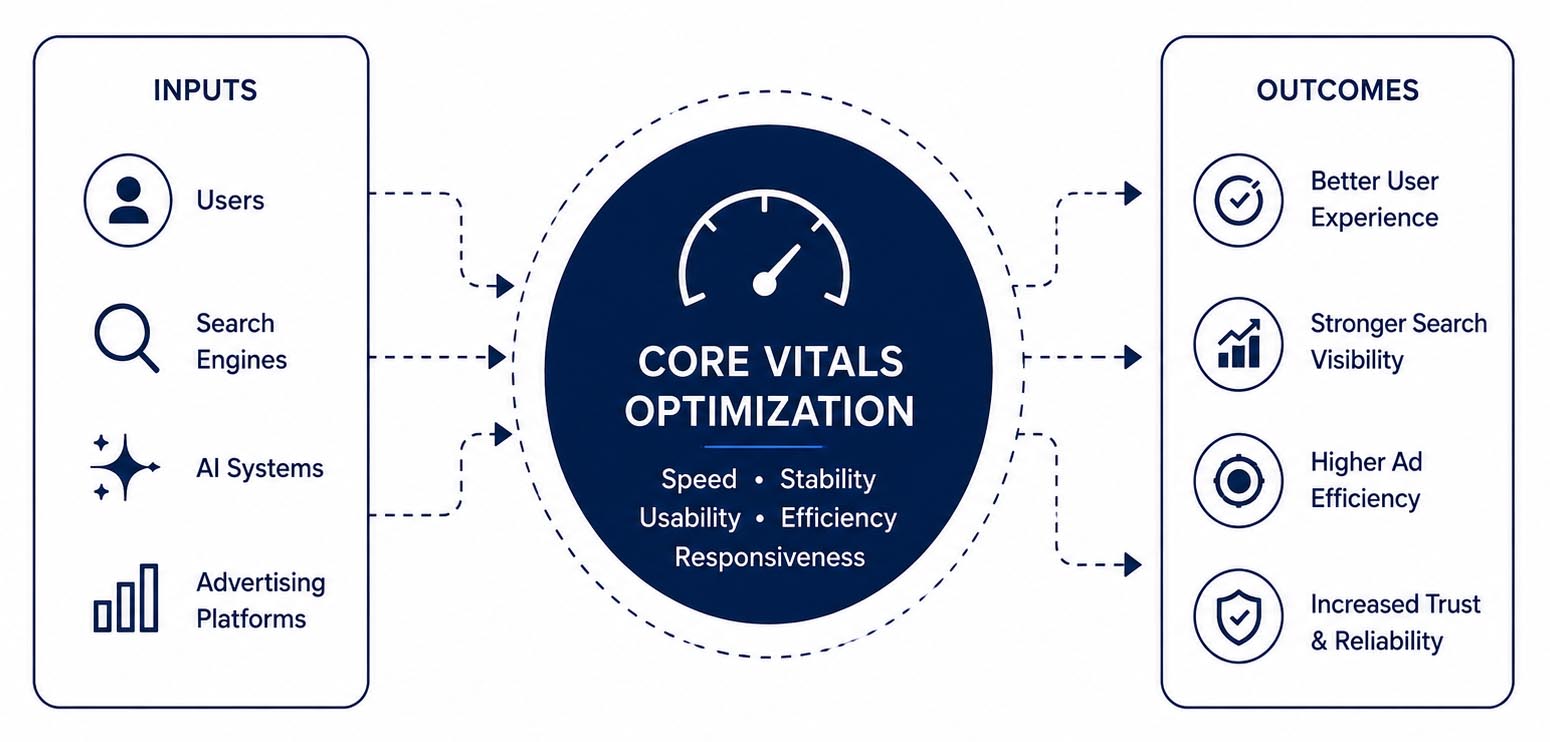
Website performance now directly influences engagement, search rankings, advertising efficiency, and overall customer experience.
Modern users expect websites to load quickly and respond smoothly across every device. Even small delays can negatively impact bounce rates, form submissions, conversion behavior, and customer trust.
At Incend Media, we focus heavily on improving the technical systems underneath website performance through cleaner architecture, optimized delivery systems, responsive rendering, and stronger technical efficiency.
Improving how websites load and display content helps support smoother user experiences.
Efficient image, script, and resource delivery improves overall performance consistency.
Reducing unnecessary technical overhead often improves speed and responsiveness.
Performance optimization works best when websites and infrastructure operate together efficiently.

Optimized websites help reduce friction and improve engagement quality.

Modern websites must support seamless usability across every device.

Performance increasingly contributes to discoverability across modern search ecosystems.

Fast, stable websites help create stronger digital experiences and credibility.
Modern websites should adapt cleanly across varying screen sizes and devices.
Improved rendering systems help reduce delays on mobile networks and devices.
Cleaner structure often improves usability and engagement on smaller screens.
Reliable experiences across platforms help strengthen trust and usability.
Performance systems should be evaluated continuously as websites evolve.
Routine optimization helps reduce long-term technical inefficiencies.
Stronger infrastructure improves scalability and overall performance consistency.
Modern websites require ongoing oversight to maintain reliable performance.
Support stronger discoverability across modern search ecosystems.

Create smoother, more reliable digital experiences across devices.

Reduce friction and support stronger user interaction behavior.

Build technical foundations designed to evolve alongside the business.
Core Web Vitals are performance metrics developed by Google to measure real-world user experience related to loading speed, visual stability, and responsiveness.
Website speed and usability now directly impact search visibility, engagement, conversion behavior, mobile usability, and customer trust.
Yes. Search engines increasingly evaluate performance, usability, and technical efficiency as part of overall website quality.
Absolutely. Most traffic now originates from mobile devices, and poor mobile usability often weakens engagement and discoverability.
Websites often accumulate technical debt through excessive plugins, bloated scripts, outdated infrastructure, inefficient media delivery, and fragmented technical systems.
Yes. Slow or unstable landing pages frequently reduce conversion rates, increase bounce rates, and weaken advertising efficiency.
Usually not. Modern websites require ongoing optimization and technical oversight to maintain strong long-term performance.
Yes. Hosting infrastructure, server response times, caching systems, and overall technical environments all contribute heavily to website performance.
Increasingly, yes. AI-driven systems rely heavily on technically accessible, fast, and stable websites for reliable content retrieval and interpretation.
Website speed, usability, and technical performance now directly influence visibility, engagement, conversion behavior, and long-term growth.
If your website struggles with slow load times, weak mobile usability, or inconsistent performance, it may be time to strengthen the systems underneath how your website operates.